
Deck Pattern Ideas: There’s Not Just One

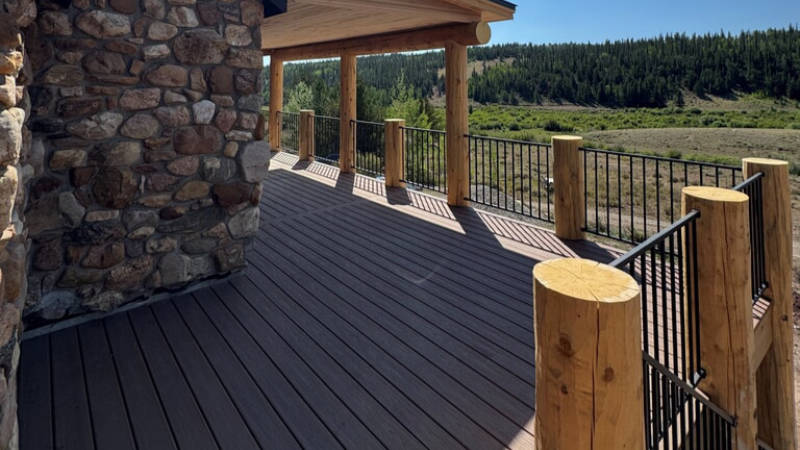
Of all the things people think about when planning a deck, it’s fair to say that the deck pattern is not high on the list. But it should be. Directly or indirectly the pattern is one of your deck’s most important visual elements, with the ability to elevate the look and feel of your deck and give it a sophisticated air. If you’d like to ensure your deck is as visually arresting as it is functional, read on because the team at your favorite deck company in Breckenridge, CO are going to explain the different deck patterns open to you.
Considering a new deck in Breckenridge, CO?
Your choice of deck pattern can impact curb appeal, perceived size, and even how people move across the space.
Various Deck Pattern Options: Their Pros and Cons
For the rest of this guide, we’re going to go through the various deck patterns available to you in order to help you choose one that will activate your deck. Here we go…
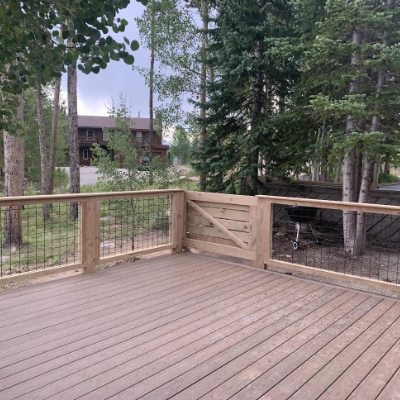
Straight Lines
This is the most common deck pattern in use today, mostly because it’s easy to execute and it keeps costs down. With this pattern, the boards/planks extend in straight lines from one side of the deck to the other. The overall effect is clean and minimalist and doesn’t call attention to itself.
Pros:
- Adds a sense of rigidity and strength
- Keeps the eye moving across the surface
- Adds an element of visual surprise
- Can be mixed with areas of straight lines to create a compelling hybrid pattern
Cons:
- It’s going to cost more than straight lines
- It will generate more waste material
- You may need to buttress the deck framing
Diagonal Lines
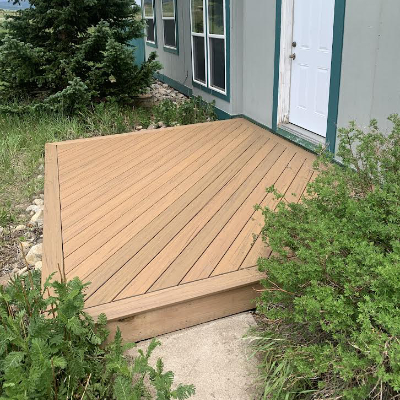
This pattern is produced by installing deck boards at a 45-degree angle to the frame of the deck. The diagonal lines create a much more active pattern than straight lines extending from side to side. Something about this pattern just looks stronger than horizontal lines too.
Pros:
- Adds a sense of rigidity and strength
- Keeps the eye moving across the surface
- Adds an element of visual surprise
- Can be mixed with areas of straight lines to create a compelling hybrid pattern
Cons:
- It’s going to cost more than straight lines
- It will generate more waste material
- You may need to buttress the deck framing
The Chevron
If you are looking for a nice, clean zigzag pattern for your deck the chevron pattern may be to your liking. The chevron pattern is a series of Vs that extend from one side of the deck to the other. On large decks there will often be regularly spaced points extending across the deck where the diagonals reverse course. The effect is quite compelling.
Pros:
- Sure to get lots of attention
- Sophistication without any muss or fuss
- Can be mixed and matched with other patterns
Cons:
- Increased material and labor costs
- Requires precision cuts
- Generates a significant amount of waste
Herringbone Pattern
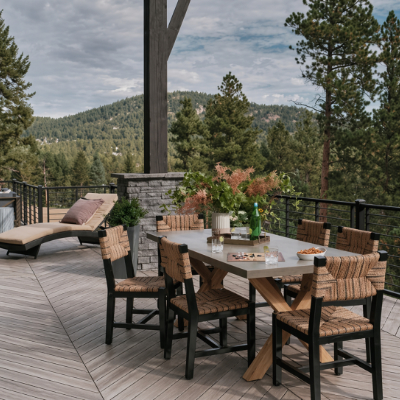
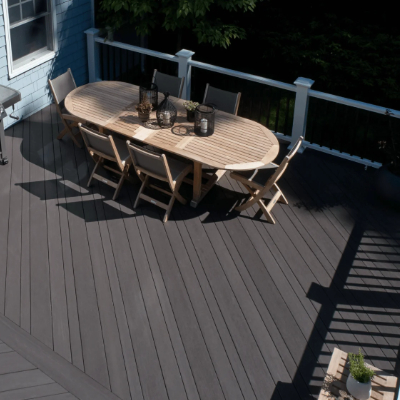
You’ll see this pattern on high-end custom decks. It has echoes of the chevron pattern in it but the point where the diagonal boards come together is more elaborate, with the planks meeting each other at 90° angles rather than 45° like in the chevron. This produces a pattern of high aesthetic value.
Pros:
- Will really make your deck stand aside from others
- Can elevate the look of your entire house
- Very structurally strong
- Great if you like impressing your guests (and who doesn’t?)
Cons:
- Generates quite a bit of waste
- Substantially more expensive than a plain horizontal pattern
Note: You’ll need a highly competent deck company to install it like Colorado Deck Works
Picture Frame Pattern
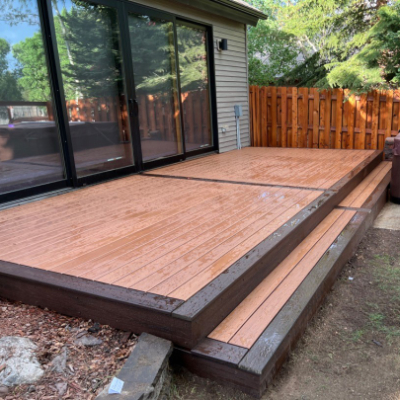
With the picture frame pattern, we take a step back from the complexity of herringbone to embrace something simpler yet still visually interesting. The picture frame pattern is so named because the deck pattern is surrounded by one or two planks that follow the perimeter of the deck. That “frame” is often composed of wood with a different color or grain to make it stand apart from the body of the deck.
Pros:
- No exposed plank ends to get damaged
- Adds visual interest without significantly increasing costs
- Any type of deck pattern can be framed
Cons:
- May need more robust framing for the deck
- Adds a bit of cost and time to the construction schedule
Parquet Pattern
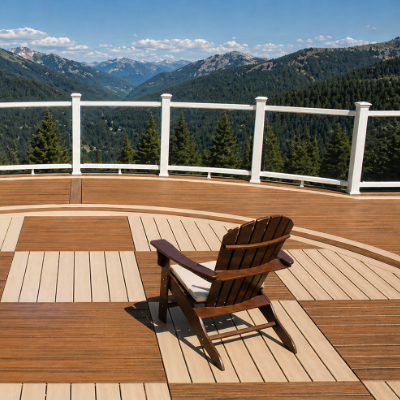
The parquet pattern consists of small-ish squares of straight-line planking, but each square is offset 90° to the ones beside it. The effect is not unlike a checkerboard, just a little busier because each square is not 1 solid board. The squares can be as large or small as you want, though about 18″ is a pretty popular choice.
Pros:
- Thoroughly unexpected
- Visually complex and engaging
- A good choice for large, covered decks
- You can tweak the squares to your heart’s content
Cons:
- Lots of cuts involved and they all need to be right
- Can take quite a long time to install
- May not be a great choice for a wet environment
Random Width Boards
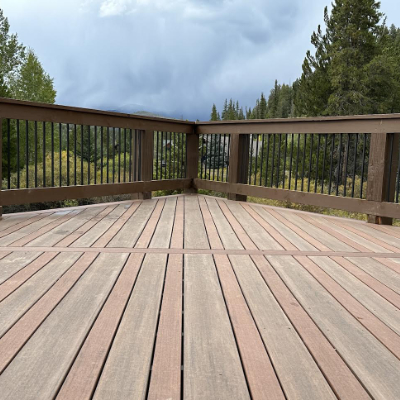
It’s hard to call this a pattern. It’s more of an anti-pattern. If you want to have a straight-line deck pattern but don’t want it to bore people to tears, using random board widths can create a lot of visual interest. This simple modification to standard horizontal decks can make them feel like expensive custom decks.
Pros:
- A good idea if your home has a rustic design
- Creates a lot of visual interest that’s both compelling and subtle
- Gives a home a timeless look
Cons:
- You’ll need to plan how much of each plank width you want
- Not all decking materials are available in a variety of widths
The Style of the House Will Influence Your Pattern Choice
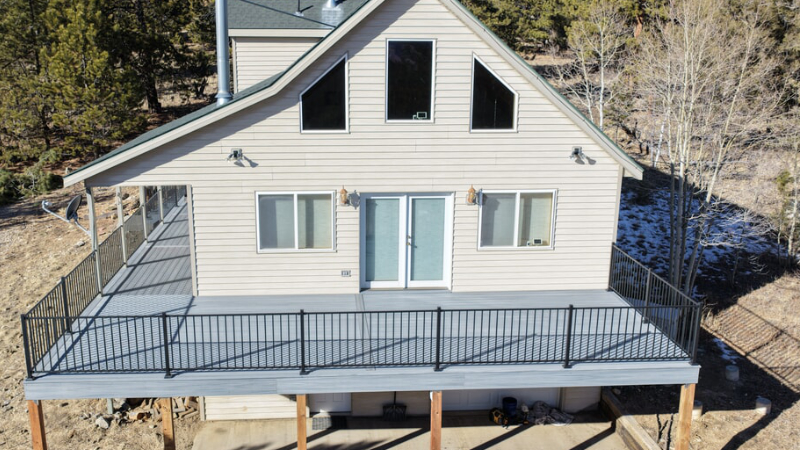
Any deck, no matter how large or small, should feel like a natural extension of the house. Therefore, when deciding which deck pattern to use look to the house for guidance. If your home is built to a minimalist aesthetic you’ll want a clean pattern like diagonals or a chevron.
On the other hand, if your home is more rustic or traditional you might want something a little more elaborate that comments on the detailing found throughout the house. So think herringbone, or parquet or a hybrid pattern combining several deck patterns.
Trust Colorado Deck Works for Stunning Custom Decks in Breckenridge, CO
The deck pattern you choose will help link the deck to the house while providing visual interest and enhancing your home’s curb appeal and market value. We hope the information provided above helps you select a good deck pattern for your home. If you are in search of a deck builder or you would like to change your current deck pattern, call Colorado Deck Works today at 719-221-2242.
| Deck Pattern | Best For | Relative Cost |
|---|---|---|
| Straight Lines | Small spaces, minimalist homes, tight budgets | Lowest |
| Diagonal Lines | Medium–large decks, modern looks, more visual energy | Low–Medium |
| Chevron / Herringbone | Showpiece decks, contemporary or upscale homes | High |
| Picture Frame | Any deck where a clean, finished edge is desired | Low–Medium |
| Parquet | Covered entertaining areas, traditional or formal homes | High |
| Random Width Boards | Rustic cabins, mountain homes, “timeless” character | Medium |
Ready to explore custom deck patterns?
Discuss straight, diagonal, chevron, herringbone, picture-frame borders and more with a local pro.