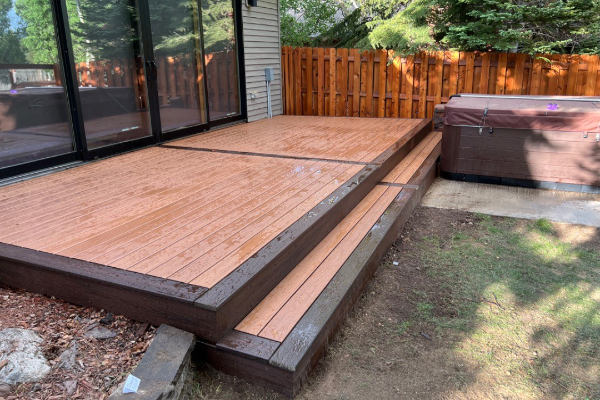
Choosing the Right Deck Color for Your Outdoor Space

Choosing the Right Deck Color for Your Outdoor Space

Your deck will be an integral part of your life for decades to come. It will change how you experience your home and will no doubt be the hub around which most of your parties and get-togethers revolve. As such, you will want to ensure your deck always looks as good as possible, and choosing just the right deck color is crucial to that effort. As Colorado’s premier deck builder, we have some experience with deck colors and how the right deck color can make the deck seem like a natural extension of the home, even if it was built 50 years after the main house.
In this guide, we’ll take an in-depth look at how to choose the right deck color.
Things to Consider When Choosing the Deck Color
When it comes to outdoor decks, there are definitely right and wrong color choices. That’s because curb appeal can affect a home’s value by up to 10%, so choosing the wrong color for your deck can have a significant negative impact on your home’s value.
That said, let’s take a look at those things you should consider when choosing a deck color.
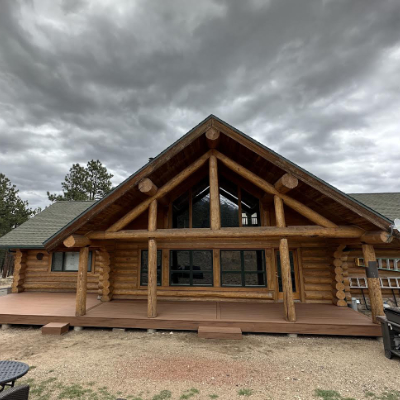
Consideration #1: The Color Scheme Used on Your House
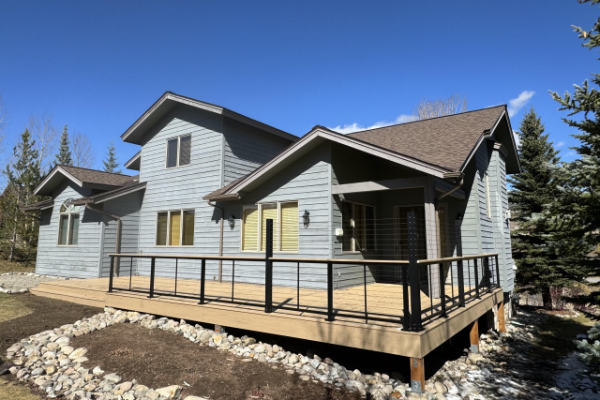
The deck is part of the house, so the color(s) you use on it should reflect that. You’ll either want to use the same color scheme as the house or a complementary one. You can certainly introduce a color or colors that are not present on the house, but they should harmonize with the home’s color scheme. And you should use at least 1 color on the deck that is also found on the house.
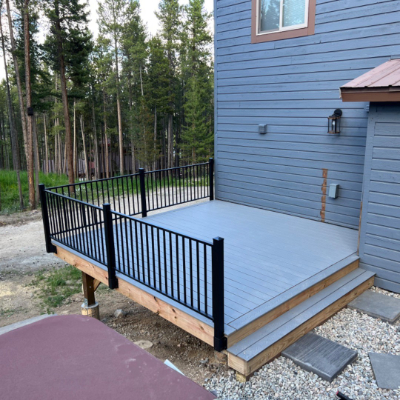
Consideration #2: Colors Present in the Surrounding Landscape
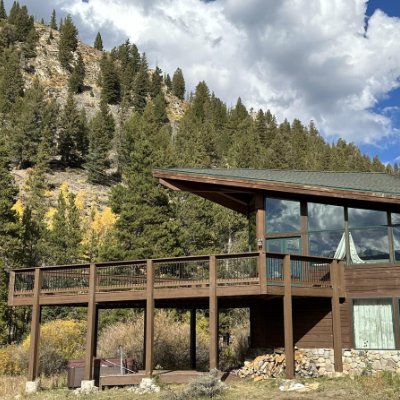
The area around Breckenridge, CO is renowned for its natural beauty. With that in mind, it’s always a good idea to incorporate some of the colors from the surrounding landscape into your deck color scheme. Earth tones such as sage, terracotta, mustard yellow, tan, and, of course, various shades of green should all be considered for your deck, as long as they harmonize with whatever other colors you introduce.
Consideration #3: The Deck Material
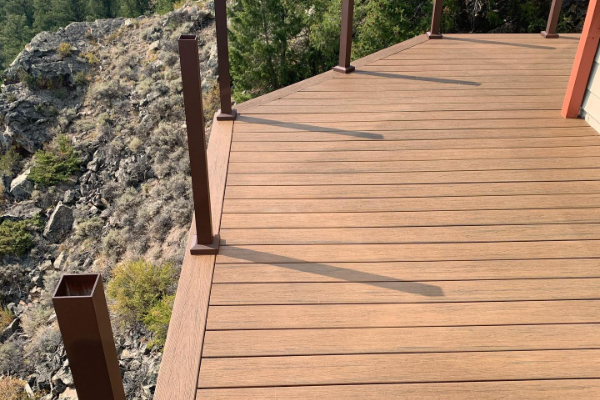
To a certain extent, your choice of deck colors will depend on the deck material. Composite decking, for instance, can be painted, but it is not always recommended. PVC decking is another popular alternative to wood that can be painted, but it requires careful preparation. Some custom decks employ Trex®, Timbertech®, travertine, or concrete. But you will need to be careful when selecting them to ensure their tone harmonizes with the house’s colors, since they can’t be painted. When it comes to offering the widest range of color options, wood is the obvious choice.
Consideration #4: The Likely Amount of Traffic
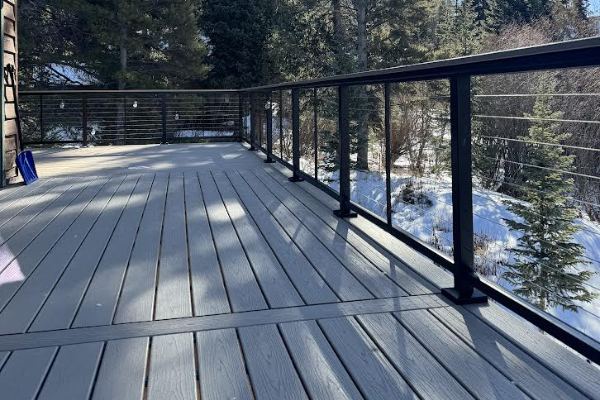
In some cases, the homeowner is not a big entertainer and may be the only one who enjoys the deck, and they’re perfectly alright with that. In such a case, they can select whatever color works and not worry about it. In other cases, however, a deck may receive heavy use because the homeowner is fond of having people over regularly. In that case, brown, green, or dark gray should be considered, since those colors will better conceal wear and tear than lighter tones. Just make sure the color you choose does not clash with the home color.
Consideration #5: Employ the Color Wheel
If you are uncertain as to exactly what color(s) to employ, you could consult a deck company or buy a color wheel at an art supply store. The color wheel will allow you to create a color scheme built on the primary, secondary, and tertiary color system employed by artists and designers. This will help ensure that, regardless of which direction you choose for the color scheme, the colors will harmonize. If you are selecting from popular brands like Trex® or Timbertech®, you should review their websites for more information on the available colors for that material.
Reminder: Make sure to test your colors first on a small area of the deck in order to ensure they A) harmonize with each other and B) harmonize with the house.
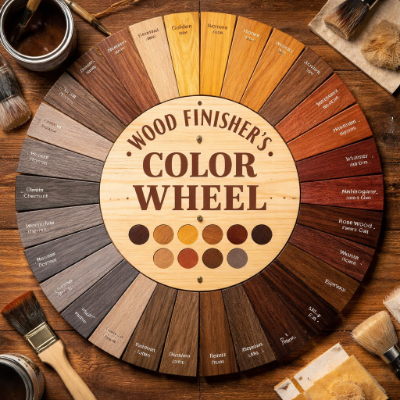
Consider Staining Your Deck
Up to this point, we’ve been talking about painting your deck. But there is another option that, while not as popular as painting, is nonetheless favored by a significant percentage of deck owners: staining.
Here are the pros and cons of staining:
| Type | Detail | Key Impact |
|---|---|---|
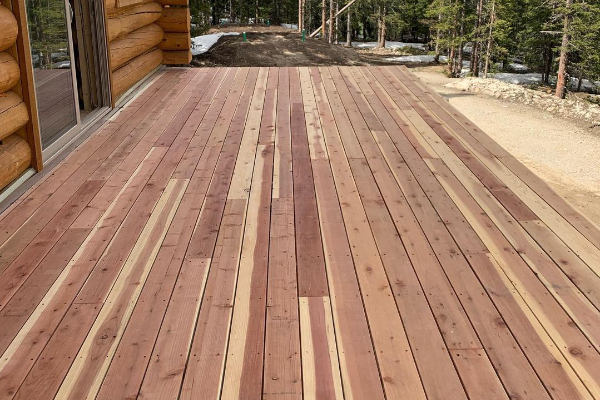
| Pro | It can bring out the natural beauty of the wood by adding richness and depth while showcasing the grain. | Ideal for homeowners who want a warm, natural, wood-forward look. |
| Pro | It protects wood against water by sealing the surface and helping prevent warping, swelling, and rot. | Improves longevity in climates with snow and heavy rain. |
| Pro | It protects the wood from UV damage, helping reduce drying, cracking, fading, and discoloration. | Keeps color more consistent under strong sun exposure. |
| Pro | It’s relatively easy to maintain—often you can clean and recoat without full stripping or heavy sanding. | Lower ongoing maintenance effort compared to many paints. |
| Con | It won’t cover imperfections; cracks and blemishes in the wood typically remain visible. | Less suitable for older, heavily weathered boards if you want a “like new” look. |
| Con | It doesn’t last very long and may wear faster than paint, especially on high-traffic decks or in harsh weather. | Expect more frequent touch-ups—often every 1–2 years. |
| Con | It’s only available for wood; you generally cannot stain PVC or composite decking. | Limits future finish options if you choose non-wood materials. |
Colorado Deck Works: The Premier Deck Builder in Breckenridge, CO
We hope you found the above information useful. And if you are looking for an experienced builder of custom decks, get in touch with Colorado Deck Works by calling us at 719-221-2242.